Showing posts with label Interview with the Vampire. Show all posts
Showing posts with label Interview with the Vampire. Show all posts
Saturday, December 12, 2020
Interview with the Vampire: Listen
Let's meditate on the value of listening, to one's self, and to others.


Interview with the Vampire: What matters...
Let's meditate on what and who truly matter to you, and how you can show them that you value them.
Interview with the Vampire: Don't be afraid
Let's meditate on the value of courage and vulnerability, and showing up every day, and living your life.
Interview with the Vampire: I see
Let's meditate on the value of truly seeing the "other," and perhaps realizing we are not really separate. We are all connected.
Sunday, May 29, 2016
Anne reveals her inspiration for Interview
Becket, Anne's indefatigable assistant, has been posting Anne's daily musings on the craft of writing and making books. In today's post, he quotes where Anne reveals one of her inspirations for writing the modern classic Interview with the Vampire.

Join the discussion here.
Join the discussion here.
Wednesday, May 18, 2016
I just finished re-reading Interview
I just finished re-reading Interview with the Vampire and I have a renewed appreciation for the violent clash of its philosophies as personified by Louis, Lestat, Claudia, and Armand; as well as the beauty of the prose, and its richness in imagery. I plan to take a deep dive into the book and then I go into The Feast of All Saints, a book I am salivating for because I have never read it. It will be a while before I encounter the vampires again, as Cry to Heaven is next in line, and then the early erotica work.
Before that, here's writing advice from Anne. Becket, her dedicated assistant, posts one daily on her page. I plan to compile these, God-willing, so I can look back on them. They're all so down-to-earth and useful.

My last post was a little obsessive-compulsive on how Louis looks like. Naturally you can cast in your mind any actor or celebrity that would help you visualize and enjoy the book. Matt Bomer and Keanu Reeves are two good-looking actors who have black hair and tantalizing eyes. That's up to you.
I related to Louis the most in this novel. I think most readers do so as well. In my past I can think ex-lovers... of a Lestat, beautiful and overpowering, whom I wounded and scarred deeply, and an Armand, who has had more than a sleight-of-hand in gripping my heart. But I jump ahead.
I want to talk a bit about the room where the boy (unnamed in this book, but is actually called Daniel Molloy), interviewed Louis. In the movie, the room was rather bright and warm, and I think that's a necessary convention for film cameras to work. Too little light and you don't get quality images. But understand it was a dark room, and not until Louis switched on the overhead was there a flood of harsh, yellow light. It was a good device to strike terror into the image of Louis, beautiful though he may be, but he is not human. Not human at all.
There's been talks of a remake of the movie with Jared Leto playing Lestat as the screenwriter and director, Josh Boone, dropped less than uncanny hints on his Twitter. There's conflicting rumors that it is a remake, and so it will be titled "Interview with the Vampire" and there's some who say it will actually be a sequel, and be based more on The Vampire Lestat. Well, we'll see.
Tomorrow, let's talk about Paul.
Before that, here's writing advice from Anne. Becket, her dedicated assistant, posts one daily on her page. I plan to compile these, God-willing, so I can look back on them. They're all so down-to-earth and useful.

My last post was a little obsessive-compulsive on how Louis looks like. Naturally you can cast in your mind any actor or celebrity that would help you visualize and enjoy the book. Matt Bomer and Keanu Reeves are two good-looking actors who have black hair and tantalizing eyes. That's up to you.
I related to Louis the most in this novel. I think most readers do so as well. In my past I can think ex-lovers... of a Lestat, beautiful and overpowering, whom I wounded and scarred deeply, and an Armand, who has had more than a sleight-of-hand in gripping my heart. But I jump ahead.
I want to talk a bit about the room where the boy (unnamed in this book, but is actually called Daniel Molloy), interviewed Louis. In the movie, the room was rather bright and warm, and I think that's a necessary convention for film cameras to work. Too little light and you don't get quality images. But understand it was a dark room, and not until Louis switched on the overhead was there a flood of harsh, yellow light. It was a good device to strike terror into the image of Louis, beautiful though he may be, but he is not human. Not human at all.
There's been talks of a remake of the movie with Jared Leto playing Lestat as the screenwriter and director, Josh Boone, dropped less than uncanny hints on his Twitter. There's conflicting rumors that it is a remake, and so it will be titled "Interview with the Vampire" and there's some who say it will actually be a sequel, and be based more on The Vampire Lestat. Well, we'll see.
Tomorrow, let's talk about Paul.
Monday, April 11, 2016
Please accompany me
Please be my companion as I read all of Anne Rice's books. I have recently completed my hardback, first edition collection through the help of many booksellers around the world. Now I am truly ready to undertake this project of reading all of Anne's books and chronicling my relationship with them.
Let's begin with Interview with the Vampire, of course. And I want to go to the first few pages. I want to establish in our minds' eyes how Louis de Pointe du Lac looks like.
Brad Pitt makes a very handsome Louis, and make no mistake. Louis is handsome. But for those of you who want to be as close to the novel's description as possible, I provide some options.
First off, I highly recommend that you find the graphic novel Claudia's Story. It is approved by Anne herself, and so not only is the art exquisite, it is also faithful to the book's descriptions of the characters, with no regard for Pitt, Tom Cruise, or Stuart Townsend. I will say, however, that Kirsten Dunst is the perfect Claudia of that age. But let's talk about Louis first, as the boy interviewer described him.
Louis's flesh is described to be as white as the collar of his shirt, like bleached bone. Click here to check out some objects that are bleached bone white, and use your imagination to see it as Louis's skin.
Let me find photos of his fiery, green eyes. I googled, and boy, are they lovely!
Here's a page from Claudia's Story. Hot, ain't he? Now go buy the book!

Let's begin with Interview with the Vampire, of course. And I want to go to the first few pages. I want to establish in our minds' eyes how Louis de Pointe du Lac looks like.
Brad Pitt makes a very handsome Louis, and make no mistake. Louis is handsome. But for those of you who want to be as close to the novel's description as possible, I provide some options.
First off, I highly recommend that you find the graphic novel Claudia's Story. It is approved by Anne herself, and so not only is the art exquisite, it is also faithful to the book's descriptions of the characters, with no regard for Pitt, Tom Cruise, or Stuart Townsend. I will say, however, that Kirsten Dunst is the perfect Claudia of that age. But let's talk about Louis first, as the boy interviewer described him.
Louis's flesh is described to be as white as the collar of his shirt, like bleached bone. Click here to check out some objects that are bleached bone white, and use your imagination to see it as Louis's skin.
Let me find photos of his fiery, green eyes. I googled, and boy, are they lovely!
Here's a page from Claudia's Story. Hot, ain't he? Now go buy the book!

Wednesday, March 23, 2016
Alice Cooper interviews Anne Rice on religion, vampires, Tom Cruise and pot
This interview appears on Billboard.com
Alice Cooper is a longtime fan of novelist and fellow Christian Anne Rice, whose Christ of Lord: Out of Egypt has been turned into The Young Messiah, a movie that opened this week. When the filmmakers arranged for a screening of the film for Cooper and wife Sheryl, they decided it would be fun to let the rocker interview the writer.
Read Cooper's interview with the Vampire author below.
Alice Cooper: Was Memnoch the Devil written before or after your conversion to Catholicism? Am I correct in assuming what I read about your conversion?
Anne Rice: Memnoch was written before I returned to the Roman Catholic Church. I think the novel reflects a Catholic upbringing, a Catholic obsession with questions of meaning, a need to explore theologies and question them stridently. I remember including every major question I had, and when Lestat rejected the entire Christian system, as it was presented to him, his decision reflected my attitude. I don't know what you read about my conversion. I can tell you that I returned to the church of my childhood in December of 1998. I gave up pondering theological absurdities and doctrines, and decided to leave it all to a higher power. I sought to go back to the fold, to the church I knew best, to the Eucharist, and I truly believed that doctrine and theology simply did not matter. What mattered was faith in God and loving God. Twelve years later I came to believe I was mistaken. Or that my approach did not work any longer for me. I left all organized religion in 2010.
Did your parents encourage your writing as a young girl?
Yes, my parents always encouraged my writing. They encouraged creativity on the part of their children in every way. My mother believed we could accomplish great things when we grew up. She told us stories of the Brontes and how they'd written under male names in order to be accepted by the literati; she filled my head with tales of Dickens and all he achieved in terms of social justice through his novels. My mother totally believed in me, and though she died when I was fourteen, I took her confidence and faith in me to heart and have all of my life. My father was a writer himself; his many rules and attitudes really did not work for me; but the fact that he was a writer, this inspired me greatly. It was a wonderful home to grow up in, filled with books and talk of the invisible and the intangible. We were as far from American materialism as one could imagine. When my first novel was published, when I received the very first copy, I flew from California to Texas in order to put that book, inscribed with love, in my father's hands.
Were you at all surprised at the success of Interview With The Vampire?
I was surprised. I had hoped and dreamed of great success, but in my heart I thought the book was too weird to be very successful. I was also shocked by some of the out and out dismissal of "a vampire novel," too. It was like a whirlwind, the publication, with a huge paperback advance sale, and a huge motion picture rights purchase; but many snubbed the book and in hardcover, it was not a sales success. In paperback it became a bestseller, and after that it became an underground favorite with many. The book lived two lives — big commercial attention; and then underground devotion.
I know there was an uproar in the casting of Tom Cruise as Lestat ( I personally think he stole the movie). Were you shocked at Tom's portrayal of Lestat?
Let's put it this way. I was thrilled with Tom's portrayal of Lestat. I thought he did a magnificent job. As soon as I finished watching the movie on video tape in my home (before its release) I called the great producer David Geffen at home in California and told him I loved the movie, loved what Tom had achieved, loved all of it. All my early fears were meaningless in light of Tom's passionate portrayal. Even now some 20 years from that time, when Lestat makes headlines, stills from that movie — with Tom Cruise and Brad Pitt — are blazed across the page or the computer screen. The movie has never stopped being popular. Every day new people see that film and review it on Amazon with exuberant praise.
Would it be hard for you to write a straight up Doris Day / Rock Hudson romantic novel? Or would that be just fun for you?
I wouldn't know how. I am a highly instinctive and spontaneous writer, and all I know how to do is access my deepest obsessions and let the words flow, no matter how strange or erotic or bizarre the result may be. I can't force myself to write something in which I don't fully believe. I just can't do it.
Do you and Steven King get along?
I don't know Stephen King at all. I've never met him or spoken to him. I wrote him a long fan letter once but never received a reply. Whenever I'm asked about his work, I praise him to the skies, and I love many of his novels. I study the novel, Firestarter whenever I'm blocked. Reading the first few pages of Firestarter helps to get me going. In the early years of his career, I think King was underrated. Later on he began to be recognized, to receive awards and to write now and then for the New York Times. I've enjoyed seeing all this. But Stephen King, to the best of my knowledge, has never commented on me or my work. This is nothing to complain about; likely he simply isn't interested. And I accept that completely. There are many writers I don't comment on, and haven't read. I admire Stephen King. I have learned a lot from his narrative style, pacing, and plotting. I wish him all the best always. He is a giant. And his success has done wonders for supernatural fiction in America.
How much did the city of New Orleans influence your writing?
It does have a dark past. I was born and grew up in New Orleans and the city and its history and legends have influenced every single thing I've ever written. I cannot imagine my novels or my career without the New Orleans influence. For me, New Orleans is unique, and surely one of the most beautiful cities in the world. I grew up loving its ante-bellum Greek Revival architecture, the Spanish architecture of the French Quarter, the majesty of the Mississippi River flowing past the city's docks, the great old oak trees that line St. Charles Avenue, — and the customs and feast days of New Orleans — Mardi Gras, St. Patrick's Day, St. Joseph's Day — and the warmth of its people. New Orleans was an entry port for immigrants in the 19th Century. The Irish and the Germans (my ancestors) flooded in, along with the Italians, and New Orleans became a unique melting pot with a lot of Caribbean ambience and European flavor. I love New Orleans with my whole heart.
Do you think ghosts are just demons in disguise with the intent of drawing people into the occult?
I don't believe in demons, and have little or no interest in ideas about demons. I think there is plenty of first person information on ghosts to indicate that they do manifest and always have; whether they are earth bound souls or spirits from some other place, I do not know. I keep abreast of all serious research into ghosts, and hauntings. I read the most current books I can on this research.
 What was your first rock concert? (Lestat was definitely a rock star.)
Gosh, I haven't been to many at all. Before writing The Vampire Lestat in 1983, I went to an Iron Maiden concert for research. But frankly, I can't remember ever attending a rock concert for pleasure. I did attend an Elton John concert once in a stadium as his guest, but I wouldn't call that a rock concert. My romance with recorded music has happened entirely through tapes, CDs, and DVDs. And I do love rock music! I discover new voices (some of them quite old) every week or so. I embrace many, many singers.
People ask me this all the time so I get to ask you. What scares you? (other than Trump and Hillary?)
Death. The idea that we may cease to exist, the idea that we may wink out without ever knowing we're winking out, that we may cease to be without answers to all our cosmic questions and even without the answer that there is nothing. That scares me a lot. (I'm not scared of Hillary. I hope she will be the next president of the United States, with Bernie Sanders as Vice President.)
You will probably go down in history as the female Edgar Allen Poe. Do you consider that a fair comparison?
I do. That's a comforting thought. I greatly admire Edgar Allan Poe. Always have. I read him when I was a child growing up. My father who owned an expensive early tape recorder, recorded his reading of the Telltale Heart for me. But I hope I'm remembered a little more for writing about outsiders, for exploring the emotions and suffering of the outsider... a theme that embraces all of my work, including my erotica and my novels about Jesus Christ.
Did you ever use any hallucinogenics (absinthe, magic mushrooms, or whatever) during the writing of any novel?
I've never used any hallucinogenic drugs. Ever. When I was coming of age in the Haight Ashbury, I saw people all around me, including my husband, taking LSD and having remarkable and sometimes shattering experiences on it; but I never touched it. Never. I was too afraid. When I did smoke pot, I tended to have powerful emotional experiences that frightened the people around me a bit and that was enough for me. Finally I swore off pot altogether because I had a devastating experience on it in which I realized that we might die without ever knowing the answers as to why we existed. I never recovered from that experience. I wrote about it in The Vampire Lestat. Lestat has this awful experience when he is drinking wine in the inn in his home village with his friend and lover, Nicholas. He says in the novel that he "saw" suddenly that we might die without knowing the answers, and that he never recovered from it. That was directly autobiographical except it was marijuana for me.
The public loves the world of Anne Rice (dark and romantic). My wife and I named our German Shepherd Lestat. So... What's next? Remember the Lord hates a quitter. As a lyricist myself I know that writing never ends.
I was honored years ago when I heard you'd named your German Shepherd Lestat. I was thrilled. Just thrilled. You are certainly right that writing never ends. I hope I pass with a pen in my hand, writing in my diary...or at the keyboard of my computer in the midst of a story. That would be lovely. What is next for me is another novel with Lestat, as he probes deeper into the origins of the vampires and the origins of human beings, another novel about his never ending quest for meaning, and his deep acknowledgment that he will always be an outsider know matter how much he is loved. Lestat has always been obsessed with goodness, and evil, and that will continue in my next book, of course.
Your book Christ the Lord Out of Egypt was the basis for the film The Young Messiah. In the co-writing of this movie many references were used from the Bible. Was the Apocrypha also used as a source?
Actually very little of the apocrypha was used in the novel, only the legends regarding Jesus' childhood in the Infancy Gospel of Thomas, which is NOT gnostic and contains legends that influenced Christian art for centuries. Nothing gnostic was used in the book whatsoever. I researched the First Century for something like ten years, off and on, probing history, archaeology, anthropology, and the bible, of course, the bible again and again and the early historians, Josephus and Philo of Alexandria. I sought to write a biblically sound and authentic novel about Jesus as a child that would bring Him alive for people, presenting a fictive day to day life for him. I wanted people to hear his laughter, smell the dust in the streets of Nazareth, to see the world in which Jesus lived; I wanted people to have a sense of Him as a real little boy, surrounded by mysteries — the Jesus whose birth was celebrated by angels singing to shepherds, the Jesus whose birth brought Magi from the East, the Jesus whose mother had been visited by an angel... The bible mattered infinitely more to me than the apocrypha.
Everyone puts their faith in something or someone. Where would you say your faith lives?
My faith lives in my novels, of course. It lives in every word I write. It lives in my novels about Jesus. Though I've moved away from institutional Christianity and organized religion — and all its theological strife — my devotion to Jesus remains fierce. My faith blazes in my vampire novels, and in the Witching Hour series, and even in the erotica I've written. I believe that people are basically good as Anne Frank put it; I believe the creation is basically good and beautiful; I believe that sex is beautiful and good. I believe our capacity to love, to know pleasure, to want to live lives of meaning — all this reflects the existence of a loving and personal Creator. I dream of all things human being reconciled in our ethical institutions and moral institutions; I dream of all of us being redeemed in every way. This is why the story of the Incarnation is so important to me, the story of Jesus being born amongst us, growing up amongst us, working and sweating and struggling as we do, and dying amongst us before he rose from the dead and ascended into Heaven. I write about outsiders seeking redemption in one form or another and always will.
Alice Cooper is a longtime fan of novelist and fellow Christian Anne Rice, whose Christ of Lord: Out of Egypt has been turned into The Young Messiah, a movie that opened this week. When the filmmakers arranged for a screening of the film for Cooper and wife Sheryl, they decided it would be fun to let the rocker interview the writer.
Read Cooper's interview with the Vampire author below.
Alice Cooper: Was Memnoch the Devil written before or after your conversion to Catholicism? Am I correct in assuming what I read about your conversion?
Anne Rice: Memnoch was written before I returned to the Roman Catholic Church. I think the novel reflects a Catholic upbringing, a Catholic obsession with questions of meaning, a need to explore theologies and question them stridently. I remember including every major question I had, and when Lestat rejected the entire Christian system, as it was presented to him, his decision reflected my attitude. I don't know what you read about my conversion. I can tell you that I returned to the church of my childhood in December of 1998. I gave up pondering theological absurdities and doctrines, and decided to leave it all to a higher power. I sought to go back to the fold, to the church I knew best, to the Eucharist, and I truly believed that doctrine and theology simply did not matter. What mattered was faith in God and loving God. Twelve years later I came to believe I was mistaken. Or that my approach did not work any longer for me. I left all organized religion in 2010.
Did your parents encourage your writing as a young girl?
Yes, my parents always encouraged my writing. They encouraged creativity on the part of their children in every way. My mother believed we could accomplish great things when we grew up. She told us stories of the Brontes and how they'd written under male names in order to be accepted by the literati; she filled my head with tales of Dickens and all he achieved in terms of social justice through his novels. My mother totally believed in me, and though she died when I was fourteen, I took her confidence and faith in me to heart and have all of my life. My father was a writer himself; his many rules and attitudes really did not work for me; but the fact that he was a writer, this inspired me greatly. It was a wonderful home to grow up in, filled with books and talk of the invisible and the intangible. We were as far from American materialism as one could imagine. When my first novel was published, when I received the very first copy, I flew from California to Texas in order to put that book, inscribed with love, in my father's hands.
Were you at all surprised at the success of Interview With The Vampire?
I was surprised. I had hoped and dreamed of great success, but in my heart I thought the book was too weird to be very successful. I was also shocked by some of the out and out dismissal of "a vampire novel," too. It was like a whirlwind, the publication, with a huge paperback advance sale, and a huge motion picture rights purchase; but many snubbed the book and in hardcover, it was not a sales success. In paperback it became a bestseller, and after that it became an underground favorite with many. The book lived two lives — big commercial attention; and then underground devotion.
I know there was an uproar in the casting of Tom Cruise as Lestat ( I personally think he stole the movie). Were you shocked at Tom's portrayal of Lestat?
Let's put it this way. I was thrilled with Tom's portrayal of Lestat. I thought he did a magnificent job. As soon as I finished watching the movie on video tape in my home (before its release) I called the great producer David Geffen at home in California and told him I loved the movie, loved what Tom had achieved, loved all of it. All my early fears were meaningless in light of Tom's passionate portrayal. Even now some 20 years from that time, when Lestat makes headlines, stills from that movie — with Tom Cruise and Brad Pitt — are blazed across the page or the computer screen. The movie has never stopped being popular. Every day new people see that film and review it on Amazon with exuberant praise.
Would it be hard for you to write a straight up Doris Day / Rock Hudson romantic novel? Or would that be just fun for you?
I wouldn't know how. I am a highly instinctive and spontaneous writer, and all I know how to do is access my deepest obsessions and let the words flow, no matter how strange or erotic or bizarre the result may be. I can't force myself to write something in which I don't fully believe. I just can't do it.
Do you and Steven King get along?
I don't know Stephen King at all. I've never met him or spoken to him. I wrote him a long fan letter once but never received a reply. Whenever I'm asked about his work, I praise him to the skies, and I love many of his novels. I study the novel, Firestarter whenever I'm blocked. Reading the first few pages of Firestarter helps to get me going. In the early years of his career, I think King was underrated. Later on he began to be recognized, to receive awards and to write now and then for the New York Times. I've enjoyed seeing all this. But Stephen King, to the best of my knowledge, has never commented on me or my work. This is nothing to complain about; likely he simply isn't interested. And I accept that completely. There are many writers I don't comment on, and haven't read. I admire Stephen King. I have learned a lot from his narrative style, pacing, and plotting. I wish him all the best always. He is a giant. And his success has done wonders for supernatural fiction in America.
How much did the city of New Orleans influence your writing?
It does have a dark past. I was born and grew up in New Orleans and the city and its history and legends have influenced every single thing I've ever written. I cannot imagine my novels or my career without the New Orleans influence. For me, New Orleans is unique, and surely one of the most beautiful cities in the world. I grew up loving its ante-bellum Greek Revival architecture, the Spanish architecture of the French Quarter, the majesty of the Mississippi River flowing past the city's docks, the great old oak trees that line St. Charles Avenue, — and the customs and feast days of New Orleans — Mardi Gras, St. Patrick's Day, St. Joseph's Day — and the warmth of its people. New Orleans was an entry port for immigrants in the 19th Century. The Irish and the Germans (my ancestors) flooded in, along with the Italians, and New Orleans became a unique melting pot with a lot of Caribbean ambience and European flavor. I love New Orleans with my whole heart.
Do you think ghosts are just demons in disguise with the intent of drawing people into the occult?
I don't believe in demons, and have little or no interest in ideas about demons. I think there is plenty of first person information on ghosts to indicate that they do manifest and always have; whether they are earth bound souls or spirits from some other place, I do not know. I keep abreast of all serious research into ghosts, and hauntings. I read the most current books I can on this research.
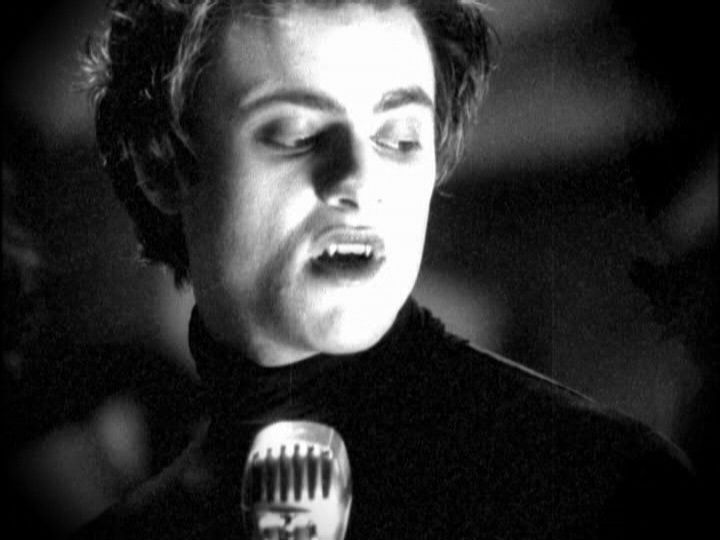
Gosh, I haven't been to many at all. Before writing The Vampire Lestat in 1983, I went to an Iron Maiden concert for research. But frankly, I can't remember ever attending a rock concert for pleasure. I did attend an Elton John concert once in a stadium as his guest, but I wouldn't call that a rock concert. My romance with recorded music has happened entirely through tapes, CDs, and DVDs. And I do love rock music! I discover new voices (some of them quite old) every week or so. I embrace many, many singers.
People ask me this all the time so I get to ask you. What scares you? (other than Trump and Hillary?)
Death. The idea that we may cease to exist, the idea that we may wink out without ever knowing we're winking out, that we may cease to be without answers to all our cosmic questions and even without the answer that there is nothing. That scares me a lot. (I'm not scared of Hillary. I hope she will be the next president of the United States, with Bernie Sanders as Vice President.)
You will probably go down in history as the female Edgar Allen Poe. Do you consider that a fair comparison?
I do. That's a comforting thought. I greatly admire Edgar Allan Poe. Always have. I read him when I was a child growing up. My father who owned an expensive early tape recorder, recorded his reading of the Telltale Heart for me. But I hope I'm remembered a little more for writing about outsiders, for exploring the emotions and suffering of the outsider... a theme that embraces all of my work, including my erotica and my novels about Jesus Christ.
Did you ever use any hallucinogenics (absinthe, magic mushrooms, or whatever) during the writing of any novel?
I've never used any hallucinogenic drugs. Ever. When I was coming of age in the Haight Ashbury, I saw people all around me, including my husband, taking LSD and having remarkable and sometimes shattering experiences on it; but I never touched it. Never. I was too afraid. When I did smoke pot, I tended to have powerful emotional experiences that frightened the people around me a bit and that was enough for me. Finally I swore off pot altogether because I had a devastating experience on it in which I realized that we might die without ever knowing the answers as to why we existed. I never recovered from that experience. I wrote about it in The Vampire Lestat. Lestat has this awful experience when he is drinking wine in the inn in his home village with his friend and lover, Nicholas. He says in the novel that he "saw" suddenly that we might die without knowing the answers, and that he never recovered from it. That was directly autobiographical except it was marijuana for me.
I was honored years ago when I heard you'd named your German Shepherd Lestat. I was thrilled. Just thrilled. You are certainly right that writing never ends. I hope I pass with a pen in my hand, writing in my diary...or at the keyboard of my computer in the midst of a story. That would be lovely. What is next for me is another novel with Lestat, as he probes deeper into the origins of the vampires and the origins of human beings, another novel about his never ending quest for meaning, and his deep acknowledgment that he will always be an outsider know matter how much he is loved. Lestat has always been obsessed with goodness, and evil, and that will continue in my next book, of course.
Your book Christ the Lord Out of Egypt was the basis for the film The Young Messiah. In the co-writing of this movie many references were used from the Bible. Was the Apocrypha also used as a source?
Actually very little of the apocrypha was used in the novel, only the legends regarding Jesus' childhood in the Infancy Gospel of Thomas, which is NOT gnostic and contains legends that influenced Christian art for centuries. Nothing gnostic was used in the book whatsoever. I researched the First Century for something like ten years, off and on, probing history, archaeology, anthropology, and the bible, of course, the bible again and again and the early historians, Josephus and Philo of Alexandria. I sought to write a biblically sound and authentic novel about Jesus as a child that would bring Him alive for people, presenting a fictive day to day life for him. I wanted people to hear his laughter, smell the dust in the streets of Nazareth, to see the world in which Jesus lived; I wanted people to have a sense of Him as a real little boy, surrounded by mysteries — the Jesus whose birth was celebrated by angels singing to shepherds, the Jesus whose birth brought Magi from the East, the Jesus whose mother had been visited by an angel... The bible mattered infinitely more to me than the apocrypha.
Everyone puts their faith in something or someone. Where would you say your faith lives?
My faith lives in my novels, of course. It lives in every word I write. It lives in my novels about Jesus. Though I've moved away from institutional Christianity and organized religion — and all its theological strife — my devotion to Jesus remains fierce. My faith blazes in my vampire novels, and in the Witching Hour series, and even in the erotica I've written. I believe that people are basically good as Anne Frank put it; I believe the creation is basically good and beautiful; I believe that sex is beautiful and good. I believe our capacity to love, to know pleasure, to want to live lives of meaning — all this reflects the existence of a loving and personal Creator. I dream of all things human being reconciled in our ethical institutions and moral institutions; I dream of all of us being redeemed in every way. This is why the story of the Incarnation is so important to me, the story of Jesus being born amongst us, growing up amongst us, working and sweating and struggling as we do, and dying amongst us before he rose from the dead and ascended into Heaven. I write about outsiders seeking redemption in one form or another and always will.
Tuesday, February 2, 2016
2016, the year I will read Rice
This is a statement of recommitment to the purpose of this blog, which is to read Anne Rice's books in chronological order, meaning to begin from Interview with the Vampire up to Prince Lestat, and post my relationship to each book and each character along the way.
But I do need a framing device for this. What do I mean?
I am familiar with Rice's vampires and her lore and the rules of her mythology, that vampires have souls, that the sunlight destroys them. Stephenie Meyer's Twilight has made the vampire effeminate, making them sparkle like a pop boy band, paring their fangs blunt, dumbing them down so they repeat school over and over, taking the sex out of them and rendering them impotent. That's not the vampire I want, but that's the vampire that most millennials know. True Blood is fun, but it's cheeky fun, and it didn't help at all. Gone is the scare that even Stephen King was successful in injecting into vampire lore in Salem's Lot.
So I need to step back to a frame of mind before sparkly, impotent vampires, even before Louis and Lestat, and into the popular literature back then. So I take on a classic. Bram Stoker's Dracula. My questions are, is it possible that Dracula exists in the same universe as Louis and Lestat, meaning, our own world? Where do the lore rules disagree? Dracula is a pretty mean, scary creature, and was the vampire of vampires before Lestat stepped to the fore.
I got this idea from the Chicago Tribune where it said that "Anne Rice begins where Bram Stoker and the Hollywood versions leave off..." so here goes. I'm about sixty percent into Dracula, and as soon as I am done with that I shall post a review on my readers site, and then proceed with reading Interview again. I think I shall enjoy this.
But I do need a framing device for this. What do I mean?
I am familiar with Rice's vampires and her lore and the rules of her mythology, that vampires have souls, that the sunlight destroys them. Stephenie Meyer's Twilight has made the vampire effeminate, making them sparkle like a pop boy band, paring their fangs blunt, dumbing them down so they repeat school over and over, taking the sex out of them and rendering them impotent. That's not the vampire I want, but that's the vampire that most millennials know. True Blood is fun, but it's cheeky fun, and it didn't help at all. Gone is the scare that even Stephen King was successful in injecting into vampire lore in Salem's Lot.
So I need to step back to a frame of mind before sparkly, impotent vampires, even before Louis and Lestat, and into the popular literature back then. So I take on a classic. Bram Stoker's Dracula. My questions are, is it possible that Dracula exists in the same universe as Louis and Lestat, meaning, our own world? Where do the lore rules disagree? Dracula is a pretty mean, scary creature, and was the vampire of vampires before Lestat stepped to the fore.
I got this idea from the Chicago Tribune where it said that "Anne Rice begins where Bram Stoker and the Hollywood versions leave off..." so here goes. I'm about sixty percent into Dracula, and as soon as I am done with that I shall post a review on my readers site, and then proceed with reading Interview again. I think I shall enjoy this.
Thursday, January 1, 2015
It's 2015! Happy New Year, everyone!
We got home from Baguio earlier today in the afternoon. I slept most of the ride home, was too tired. I feel sorry for my wife who had to drive from Rosario, La Union back to Malolos, Bulacan. I still don't know how to drive.
We parked Broom, our car, at a small hotel in Rosario, La Union, very near the boundary to Benguet province. We were not confident we could drive up Kennon's tricky zigzags. Our trip to Baguio was to satisfy Dana's wish to see "mountains" again, to celebrate our 7th anniversary (love you, Veck!), and to claim my hardcover Interview with the Vampire and The Vampire Armand which I purchased from a Baguio bookseller last year.
Armand still looked brand new, but Interview's moldy. It seems denatured alcohol is the best way to treat it, according to online sources. I'm afraid I might damage the book. How about sunning it?
I'm watching a youtube video now by "Mad Maine" and she suggests killing the mildew the natural way. She suggests putting a mildewy or mouldy book into a zip lock bag, sprinkling it with baking soda, sealing the bag, and then leaving it in the freezer for a week. I think I will just try that.
But I am so happy with my purchases. I plan to continue to save money to complete my hardcover collection of Anne's books.
I wish I brought a video cam with me. I could have made an interesting documentary about my bookhunting for Anne Rice's first ed books in the Philippines.
We parked Broom, our car, at a small hotel in Rosario, La Union, very near the boundary to Benguet province. We were not confident we could drive up Kennon's tricky zigzags. Our trip to Baguio was to satisfy Dana's wish to see "mountains" again, to celebrate our 7th anniversary (love you, Veck!), and to claim my hardcover Interview with the Vampire and The Vampire Armand which I purchased from a Baguio bookseller last year.
Armand still looked brand new, but Interview's moldy. It seems denatured alcohol is the best way to treat it, according to online sources. I'm afraid I might damage the book. How about sunning it?
I'm watching a youtube video now by "Mad Maine" and she suggests killing the mildew the natural way. She suggests putting a mildewy or mouldy book into a zip lock bag, sprinkling it with baking soda, sealing the bag, and then leaving it in the freezer for a week. I think I will just try that.
But I am so happy with my purchases. I plan to continue to save money to complete my hardcover collection of Anne's books.
I wish I brought a video cam with me. I could have made an interesting documentary about my bookhunting for Anne Rice's first ed books in the Philippines.
Wednesday, December 31, 2014
My different editions of Interview with the Vampire
The edition I have read over and over again is a large paperback 20th anniversary edition of Interview with the Vampire published by Ballantine Books. It is now with my cousin Uriel. He has just read Claudia's Story and now he's ready for the real deal.
I also have the leatherbound edition that also contains The Vampire Lestat, and The Queen of the Damned. That's the edition I am reading now, since my other book is on loan. I have since purchased online a hardbound edition of QOTD and I'm just waiting for it to be shipped.
We are going up to Baguio because I also bought from a seller there Interview with the Vampire, hardcover edition, and The Vampire Armand. I am ending my 2014 with a bang and starting 2015 with fangs!
So, to complete my hardcover collection of Anne Rice's books, I just need to find The Feast of All Saints, The Witching Hour, Blood Canticle, and Blackwood Farm. I am also looking for the first edition of The Mummy in large paperback.
Happy New Year to all!
I also have the leatherbound edition that also contains The Vampire Lestat, and The Queen of the Damned. That's the edition I am reading now, since my other book is on loan. I have since purchased online a hardbound edition of QOTD and I'm just waiting for it to be shipped.
We are going up to Baguio because I also bought from a seller there Interview with the Vampire, hardcover edition, and The Vampire Armand. I am ending my 2014 with a bang and starting 2015 with fangs!
So, to complete my hardcover collection of Anne Rice's books, I just need to find The Feast of All Saints, The Witching Hour, Blood Canticle, and Blackwood Farm. I am also looking for the first edition of The Mummy in large paperback.
Happy New Year to all!
Monday, December 29, 2014
Day 24 on IWTV: Claudia has a plan
"Locked together in hatred," was how Claudia described their trio, and Louis felt despair towards all this. Claudia had nowhere to go, and it seemed like he felt neither did he. Living alone as a mortal, in one's twilight years, awaiting death in a home for the aged... we are familiar with this in this century. Sad this image might be, but something the society has come to expect. But to live alone for all eternity?
Louis and Claudia did not yet know that there were other vampires besides them. And they were stuck with Lestat, their enigmatic, charismatic, and villainous maker. I wish I can quote in full here what Claudia said to Louis, for it was so insightful, and important regarding Louis's character and nature, and elegantly written. But I would not. I would rather that you read the novel alongside me. That you even read deeper into it, farther than my own slovenly pace, and admire it on your own. All of this beautiful insight to Louis's character amidst the image of the skull and lavender petals.
At this point it is revealed what Claudia's vampire age was: sixty-five years old, trapped forever in a young child's body. And now she connives with Louis to leave Lestat, something that Louis had often dreamed of but never thought possible.
While I feel sorry for Lestat, I side with Claudia in this. I think everyone in an abusive relationship, where one deems to make himself master and of his equals his slaves, should leave. No one deserves to be abused and used. I live in the Philippines, probably the only country in the world today where the Catholic Church holds the bastion over the government. We have no divorce laws, and "annulment" laws are only for the rich. So many abused wives (or husbands) are stuck in marriages that are better ended. But to be locked together in hatred is to be in hell on earth.
This is never an easy decision, of course. The price of liberation. But to do that, one must be free first in his own mind. Louis had always seen himself as trapped, fated unto Lestat. Claudia saw different. Claudia had a plan.
Louis and Claudia did not yet know that there were other vampires besides them. And they were stuck with Lestat, their enigmatic, charismatic, and villainous maker. I wish I can quote in full here what Claudia said to Louis, for it was so insightful, and important regarding Louis's character and nature, and elegantly written. But I would not. I would rather that you read the novel alongside me. That you even read deeper into it, farther than my own slovenly pace, and admire it on your own. All of this beautiful insight to Louis's character amidst the image of the skull and lavender petals.
At this point it is revealed what Claudia's vampire age was: sixty-five years old, trapped forever in a young child's body. And now she connives with Louis to leave Lestat, something that Louis had often dreamed of but never thought possible.
While I feel sorry for Lestat, I side with Claudia in this. I think everyone in an abusive relationship, where one deems to make himself master and of his equals his slaves, should leave. No one deserves to be abused and used. I live in the Philippines, probably the only country in the world today where the Catholic Church holds the bastion over the government. We have no divorce laws, and "annulment" laws are only for the rich. So many abused wives (or husbands) are stuck in marriages that are better ended. But to be locked together in hatred is to be in hell on earth.
This is never an easy decision, of course. The price of liberation. But to do that, one must be free first in his own mind. Louis had always seen himself as trapped, fated unto Lestat. Claudia saw different. Claudia had a plan.
Sunday, December 28, 2014
Day 23 on IWTV: Vampire Eyes
With the rising of Claudia's self-awareness came also her questions, the very same questions Louis once asked Lestat to no end. Only, of course, this time it came from Claudia's unique perspective. Even when she quotes Louis on his term "vampire eyes," Louis admits it sounded differently coming from her.
To see with vampire eyes is to look deeply into the beauty of the world and not to take anything for granted. That's how I understood it from Louis. When I read that part I took it upon myself to try to do the same with my all-too-human eyes. To look deeply into people. To really see, without the haze of prejudice clouding my vision. I also wanted to be a deep reader, something described in a Time article by Annie Murphy Paul. Claudia seems to mean vampire eyes as killer eyes: to be a true predator to the throbbing world.
So Louis takes Claudia out for a walk. White and pink oleanders shoot out from cracks in the street.
I shudder because I know where Louis is taking Claudia. He was doing the brave thing, of showing her the truth of the past, of Claudia's death (and birth into vampire life). This honesty is never an easy thing.
How do you admit to a loved one that you have wronged her at a time that she was helpless to defend herself?
But that was exactly what Louis set out to do. And when he did he described the moment being "elastic" and "painful" and "unbearable." He became acutely aware of her, and of their surroundings, and this is the quality of clarity. Clarity often does bring pain. Pain is its price. Pain and fear.
And when Louis confessed it all, how he fed on her, and how Lestat gave her the Blood, Claudia's response was searing: "And here it is. And I hate you both."
Will there be no end to Louis's sadness and string of tragedies in his vampire life?
To see with vampire eyes is to look deeply into the beauty of the world and not to take anything for granted. That's how I understood it from Louis. When I read that part I took it upon myself to try to do the same with my all-too-human eyes. To look deeply into people. To really see, without the haze of prejudice clouding my vision. I also wanted to be a deep reader, something described in a Time article by Annie Murphy Paul. Claudia seems to mean vampire eyes as killer eyes: to be a true predator to the throbbing world.
So Louis takes Claudia out for a walk. White and pink oleanders shoot out from cracks in the street.
 |
| Pink Oleanders |
How do you admit to a loved one that you have wronged her at a time that she was helpless to defend herself?
But that was exactly what Louis set out to do. And when he did he described the moment being "elastic" and "painful" and "unbearable." He became acutely aware of her, and of their surroundings, and this is the quality of clarity. Clarity often does bring pain. Pain is its price. Pain and fear.
And when Louis confessed it all, how he fed on her, and how Lestat gave her the Blood, Claudia's response was searing: "And here it is. And I hate you both."
Will there be no end to Louis's sadness and string of tragedies in his vampire life?
Saturday, December 27, 2014
Day 22 on IWTV: Claudia's questions
Be glad I made you what you are, or I'll break you in a thousand pieces!
Well, does that sound like an empty threat from the villainous Lestat? Louis does depict him as the villain of their lives, and this argument shattered the eggshell peace the three once had. I just feel bad that Lestat wouldn't admit the truth to his fledglings, that he had to be so secretive. He had his reasons, and sadly, we'll never know in this novel. We'll have to wait till we get to The Vampire Lestat so we get his side of the story.
Claudia, in the meantime, buried herself in her books, doing research on all things myth and occult. You know, if I were given immortal life, I'd probably read as many books as I could, too! What a wonderful way to spend eternity, to acquire and read books, and to travel! No, I won't be enrolling in high school over and over and over again.
Lestat had a beautiful fountain made, and hired replacement workers to the two that Claudia killed. And then Lestat made killings that made it to the papers! That bit put a smile on my face. But we also see Lestat being solicitous about Claudia's whereabouts. Oh, if only the Brat Prince just outright expressed his love for the little girl--whoops! woman vampire. Claudia now is beginning to ask the same questions Louis asked; the very same questions that had brought nothing but sadness to his heart.
The image of the skull in this scene is jarring, and a grim reminder of death. At this point, Claudia still did not know that Louis had a hand in her death, drinking from her, and that it was Lestat who gave her the Blood. In this sense, both of them are her parents. But could Louis admit this? Could he keep this secret?
Well, does that sound like an empty threat from the villainous Lestat? Louis does depict him as the villain of their lives, and this argument shattered the eggshell peace the three once had. I just feel bad that Lestat wouldn't admit the truth to his fledglings, that he had to be so secretive. He had his reasons, and sadly, we'll never know in this novel. We'll have to wait till we get to The Vampire Lestat so we get his side of the story.
Claudia, in the meantime, buried herself in her books, doing research on all things myth and occult. You know, if I were given immortal life, I'd probably read as many books as I could, too! What a wonderful way to spend eternity, to acquire and read books, and to travel! No, I won't be enrolling in high school over and over and over again.
Lestat had a beautiful fountain made, and hired replacement workers to the two that Claudia killed. And then Lestat made killings that made it to the papers! That bit put a smile on my face. But we also see Lestat being solicitous about Claudia's whereabouts. Oh, if only the Brat Prince just outright expressed his love for the little girl--whoops! woman vampire. Claudia now is beginning to ask the same questions Louis asked; the very same questions that had brought nothing but sadness to his heart.
The image of the skull in this scene is jarring, and a grim reminder of death. At this point, Claudia still did not know that Louis had a hand in her death, drinking from her, and that it was Lestat who gave her the Blood. In this sense, both of them are her parents. But could Louis admit this? Could he keep this secret?
Wednesday, December 17, 2014
Day 21 on IWTV: Claudia and the corpses
Why I have failed to point out Anne Rice's prose until this post is a major oversight on my part. Her prose has often been described as detailed, lush, vibrant. I agree. I would say her mind is awake, and her imagination is a well-exercised muscle. She does not hold back on description, but she never goes overboard. She treads the delicate balance of just enough description to help us see what she sees and hears and feels and tastes and smells, and that is a mark of a truly skilled writer.
For instance, to describe Louis's sadness, she uses images of darkness, nearing the edge of a cliff, cracks and faults in the earth. Anyone who has ever experienced a period of depression would recognize these. Anyone who's had a happy, blissful life devoid of any sadness (is there really anyone in life like that?) will be able to empathize at least.
Louis's depression threatens to descend and crash upon him once again. When he began to notice Claudia growing up, maturing into a woman, her mind no longer a child's. Anyone who has ever lost a lover or experienced the heartbreak of a break-up could identify with how Louis felt about this time in his life with Claudia.
It is easy to dismiss Louis's depression to his being inducted into the never-ending Night. But we must remember that he was already depressed when Lestat found him. He was mourning Paul's death. Languishing, inviting death to find him.
What Claudia did to the mother and daughter servants were macabre! Claudia has become an enigma to Lestat and Louis. If you are reading the novel along with me, you know the feeling of wanting to enter Claudia's mind, to see it from her point-of-view, and find out why she began behaving like this. But aren't women always a mystery?
Go read for yourself Interview with the Vampire: Claudia's Story, the graphic novel adapted by Ashley Marie Witter.
Lestat was mad at Claudia's brash actions, and Louis was trying to reason with him. As Claudia's "parents," they had had to take care of the problem of the servants: disposing the corpses and dealing with the bereaved family. There's a funny episode of Lestat getting a bit drunk...but this also forebodes a scary event to follow. Foreshadowing, my dear writers!
 Claudia asks the question coldly, "Which one of you made me the way I am?" In the movie played brilliantly by Dunst, she screams out the question. In the book, there is a chilling effect.
Claudia drops her bouquet of chrysanthemums. Think about it. This woman in a child's unchanging body, forever in that size and shape, and the diminutive petals of the mums scattering to the floor. That's the picture Anne paints for us.
Claudia is a unique vampire. She has spent her life more as a vampire than a human. She makes all of these realizations. Lestat, being mean, said Claudia would have grown up into a hag (and not age gracefully). The spite between these two is too painful.
Off-topic note. I just noticed that New Orleans is in Louisiana, and Louisiana is named after Louis XIV, King of France in 1643. Louisiana means Land of Louis. And Louis is our protagonist vampire!
For instance, to describe Louis's sadness, she uses images of darkness, nearing the edge of a cliff, cracks and faults in the earth. Anyone who has ever experienced a period of depression would recognize these. Anyone who's had a happy, blissful life devoid of any sadness (is there really anyone in life like that?) will be able to empathize at least.
Louis's depression threatens to descend and crash upon him once again. When he began to notice Claudia growing up, maturing into a woman, her mind no longer a child's. Anyone who has ever lost a lover or experienced the heartbreak of a break-up could identify with how Louis felt about this time in his life with Claudia.
It is easy to dismiss Louis's depression to his being inducted into the never-ending Night. But we must remember that he was already depressed when Lestat found him. He was mourning Paul's death. Languishing, inviting death to find him.
What Claudia did to the mother and daughter servants were macabre! Claudia has become an enigma to Lestat and Louis. If you are reading the novel along with me, you know the feeling of wanting to enter Claudia's mind, to see it from her point-of-view, and find out why she began behaving like this. But aren't women always a mystery?
Go read for yourself Interview with the Vampire: Claudia's Story, the graphic novel adapted by Ashley Marie Witter.
Lestat was mad at Claudia's brash actions, and Louis was trying to reason with him. As Claudia's "parents," they had had to take care of the problem of the servants: disposing the corpses and dealing with the bereaved family. There's a funny episode of Lestat getting a bit drunk...but this also forebodes a scary event to follow. Foreshadowing, my dear writers!
Claudia drops her bouquet of chrysanthemums. Think about it. This woman in a child's unchanging body, forever in that size and shape, and the diminutive petals of the mums scattering to the floor. That's the picture Anne paints for us.
Claudia is a unique vampire. She has spent her life more as a vampire than a human. She makes all of these realizations. Lestat, being mean, said Claudia would have grown up into a hag (and not age gracefully). The spite between these two is too painful.
Off-topic note. I just noticed that New Orleans is in Louisiana, and Louisiana is named after Louis XIV, King of France in 1643. Louisiana means Land of Louis. And Louis is our protagonist vampire!
Sunday, December 14, 2014
Day 20 on IWTV: Claudia's coffin
Before I go to the topic I wanted to write about in this entry, I want to quickly mention that Louis was learning to enjoy the great throng of strangers that were surrounding him in New Orleans, and from this detachment, he gave himself permission to drink blood from humans.
It's a Sunday and again at church I heard the admonition not to fall in love with this world, that we are simply pilgrims passing through, that our home is heaven. And while I do agree that heaven is our ultimate home, I can't help but fall in love with this world. I mean, look at it! The mountains, streams, rivers, trees, flowers, animals, oceans... what's not to love? I am fortunate to be born in a tropical archipelago paradise, beautiful seas and beaches, mountain ranges, plains. How can I not love being in this world?
And then you meet people. I wish to travel more, but wherever I did travel I see a lot of culture and art. And even seeing documentaries on TV about other peoples, how can you not fall in love with this world? Even God loved this world that He came into it as a Man.
But on with the story. That Louis would play along with Claudia this charade for the poor coffin maker showed how much Claudia's influence was on him. I wanted to underline the reason he gave to the coffin maker: "Her heart, she cannot live." Well, was it not Claudia's relentless heart that kept her alive as he fed on her? This was obviously too much for him.
Lestat and Claudia claimed the coffin, not without casualty, and yet Claudia did not sleep in it. It meant something different to her altogether. When we see a child's coffin it is an aberration of nature. It is a tragic picture. A bud snatched too early. But what do we think when a child killer wants it for herself?
Claudia has learned to hunt on her own, and haunted cemeteries and impoverished regions, making Lestat's heart stout. Louis, ever squeamish, couldn't bear it. She is quite a remarkable literary character. Lestat had a nickname for her: Sister Death. And a mocking one for Louis: Merciful Death.
It's a Sunday and again at church I heard the admonition not to fall in love with this world, that we are simply pilgrims passing through, that our home is heaven. And while I do agree that heaven is our ultimate home, I can't help but fall in love with this world. I mean, look at it! The mountains, streams, rivers, trees, flowers, animals, oceans... what's not to love? I am fortunate to be born in a tropical archipelago paradise, beautiful seas and beaches, mountain ranges, plains. How can I not love being in this world?
And then you meet people. I wish to travel more, but wherever I did travel I see a lot of culture and art. And even seeing documentaries on TV about other peoples, how can you not fall in love with this world? Even God loved this world that He came into it as a Man.
But on with the story. That Louis would play along with Claudia this charade for the poor coffin maker showed how much Claudia's influence was on him. I wanted to underline the reason he gave to the coffin maker: "Her heart, she cannot live." Well, was it not Claudia's relentless heart that kept her alive as he fed on her? This was obviously too much for him.
Lestat and Claudia claimed the coffin, not without casualty, and yet Claudia did not sleep in it. It meant something different to her altogether. When we see a child's coffin it is an aberration of nature. It is a tragic picture. A bud snatched too early. But what do we think when a child killer wants it for herself?
Claudia has learned to hunt on her own, and haunted cemeteries and impoverished regions, making Lestat's heart stout. Louis, ever squeamish, couldn't bear it. She is quite a remarkable literary character. Lestat had a nickname for her: Sister Death. And a mocking one for Louis: Merciful Death.
 |
| The unholy trinity |
Saturday, December 13, 2014
Day 19 on IWTV: Claudia's enigma
"Our life was much changed with Mademoiselle Claudia," said Louis. Claudia leaves an indelible mark on Louis heart, and this carries on for the rest of the novel. I must admit, on my heart, too. Claudia was truly a remarkable vampire. In many ways, she is more a vampire than Louis could ever be: ruthless in the kill, seductive, insatiable. She is truly Lestat's daughter. That's how I see Claudia. More Lestat's daughter than Louis's. More Louis's lover than daughter. But I jump ahead.
Claudia is a newborn vampire, and already she adapts to this vampire life more easily and readily than Louis did. She was not so traumatized by her Mamma's death as Louis was by Paul's passing. She had not much memory of human life to have any of Louis's regrets and clinging--or detached respect, as he would put it.
But Louis did see himself as Claudia's father, naturally, in the first years of her vampire life.
Louis's love for Claudia is unique as Lestat's. It is hard to sum up, but Rice draws it beautifully when she tells us how these two male vampires interact with her. Louis was nurturing, Lestat was proud and ambitious. Lestat brought Claudia to cemeteries and showed her victims of the plague, dead and dying. And he says that Claudia will never die, that her body will always be fresh and alive and stay always as is. He says it as a blessing, but as with all blessings, there is a dark side to it, which Claudia fully experiences.
I highly recommend that you get for yourself a copy of the graphic novel Interview with the Vampire: Claudia's Story by artist Ashley Marie Witter. You can follow her Twitter @TazyCrazy.
During her early years Claudia didn't speak. And during this time, Lestat finally rubbed off on Louis, and Louis began hunting humans. He did not lose his Louis-ness even though he's moved to humans from animals, I think. He still was, in essence, the same. The revulsion to killing, was still there, deep inside, but he would finish off his victims before he allowed it to arise. He killed differently from Lestat or Claudia. Only his melancholy has abated considerably, and he credits it not only to the kill, but to the joy of seeing the teeming life of humans around him. He was becoming more and more detached. This is very important character development.
The three of them went to the theatre often, to see operas and Shakespeare, and in this I envy them greatly. I wish I could afford to see as many plays and musicals as possible, and I find this more valuable than the furniture and carpets Lestat imported. Louis loved books and often read to Claudia. What a beautiful life, really! A romantic, fairy tale life!
Claudia learned to love human art and music and literature, an influence of Louis. Claudia learned to love the seduction of the kill, obviously a trait inherited from Lestat. Louis, of course, never forgot it was he who drew Claudia's blood. Claudia chose to sleep in his coffin with him.
But of course, the story does not end here for them. And Claudia's mind, though retaining her five-year-old body, matured and became a woman's. And soon she would voice out her opinions, her mind, her fiery intellect. And she wanted her own coffin. She wanted to see a coffin built for a child. And there are little things more tragic on this earth than a child's coffin.
Claudia is a newborn vampire, and already she adapts to this vampire life more easily and readily than Louis did. She was not so traumatized by her Mamma's death as Louis was by Paul's passing. She had not much memory of human life to have any of Louis's regrets and clinging--or detached respect, as he would put it.
But Louis did see himself as Claudia's father, naturally, in the first years of her vampire life.
Louis's love for Claudia is unique as Lestat's. It is hard to sum up, but Rice draws it beautifully when she tells us how these two male vampires interact with her. Louis was nurturing, Lestat was proud and ambitious. Lestat brought Claudia to cemeteries and showed her victims of the plague, dead and dying. And he says that Claudia will never die, that her body will always be fresh and alive and stay always as is. He says it as a blessing, but as with all blessings, there is a dark side to it, which Claudia fully experiences.
I highly recommend that you get for yourself a copy of the graphic novel Interview with the Vampire: Claudia's Story by artist Ashley Marie Witter. You can follow her Twitter @TazyCrazy.
During her early years Claudia didn't speak. And during this time, Lestat finally rubbed off on Louis, and Louis began hunting humans. He did not lose his Louis-ness even though he's moved to humans from animals, I think. He still was, in essence, the same. The revulsion to killing, was still there, deep inside, but he would finish off his victims before he allowed it to arise. He killed differently from Lestat or Claudia. Only his melancholy has abated considerably, and he credits it not only to the kill, but to the joy of seeing the teeming life of humans around him. He was becoming more and more detached. This is very important character development.
The three of them went to the theatre often, to see operas and Shakespeare, and in this I envy them greatly. I wish I could afford to see as many plays and musicals as possible, and I find this more valuable than the furniture and carpets Lestat imported. Louis loved books and often read to Claudia. What a beautiful life, really! A romantic, fairy tale life!
Claudia learned to love human art and music and literature, an influence of Louis. Claudia learned to love the seduction of the kill, obviously a trait inherited from Lestat. Louis, of course, never forgot it was he who drew Claudia's blood. Claudia chose to sleep in his coffin with him.
But of course, the story does not end here for them. And Claudia's mind, though retaining her five-year-old body, matured and became a woman's. And soon she would voice out her opinions, her mind, her fiery intellect. And she wanted her own coffin. She wanted to see a coffin built for a child. And there are little things more tragic on this earth than a child's coffin.
Friday, December 12, 2014
Day 18 on IWTV: The scene break
There is a break in the text here. There is a gap, a space, and the first letter of the next paragraph is set in a bigger font. In fiction typography this is called a scene break, and denotes a jump in time or space in the narrative.
We are following two narratives in the novel. One is Louis and the boy interviewer (Daniel Malloy) in a room on Divisadero Street. The other narrative, the heart of it, is of course Louis's story.
The structure of Interview is set in four parts. There are scene breaks, but no chapter breaks. I think this is to mimic the flow of one whole night's conversation between Daniel and Louis. At this point in the interview it was about ten p.m. The break after the creation of Claudia invites us to pause and contemplate this startling event. A child vampire! A strange phenomenon.
I think this is the third such scene break in the text so far, though I will not keep tab. If memory serves right, the first scene break was just after Louis became a vampire, and also sometime during the story of Babette.
For the next paragraphs Louis talks of Lestat being a man-of-action, reckless, thoughtless in his deeds. He says his actions are always rooted in revenge. Daniel and Louis were trying for a short bit to figure out why Lestat brought the child Claudia into the Night. Oh, if only we could ask Lestat himself what his intentions were! But this again is one of the reasons Interview is a great novel of our time. It sets itself apart in the history of Gothic literature. Suddenly, the vampire is on center stage, on spotlight. The vampire is the unlikely hero and villain. Vampires were, before Interview, several versions of Dracula. Now we are given the vampire's point-of-view. We are asked to examine his motives: both Louis's and Lestat's.
I just found out through the Lestat Book Coven that there is a manga based on Interview with the Vampire. I'm going to read it now. If you're interested in the art, click here.
We are following two narratives in the novel. One is Louis and the boy interviewer (Daniel Malloy) in a room on Divisadero Street. The other narrative, the heart of it, is of course Louis's story.
The structure of Interview is set in four parts. There are scene breaks, but no chapter breaks. I think this is to mimic the flow of one whole night's conversation between Daniel and Louis. At this point in the interview it was about ten p.m. The break after the creation of Claudia invites us to pause and contemplate this startling event. A child vampire! A strange phenomenon.
I think this is the third such scene break in the text so far, though I will not keep tab. If memory serves right, the first scene break was just after Louis became a vampire, and also sometime during the story of Babette.
For the next paragraphs Louis talks of Lestat being a man-of-action, reckless, thoughtless in his deeds. He says his actions are always rooted in revenge. Daniel and Louis were trying for a short bit to figure out why Lestat brought the child Claudia into the Night. Oh, if only we could ask Lestat himself what his intentions were! But this again is one of the reasons Interview is a great novel of our time. It sets itself apart in the history of Gothic literature. Suddenly, the vampire is on center stage, on spotlight. The vampire is the unlikely hero and villain. Vampires were, before Interview, several versions of Dracula. Now we are given the vampire's point-of-view. We are asked to examine his motives: both Louis's and Lestat's.
I just found out through the Lestat Book Coven that there is a manga based on Interview with the Vampire. I'm going to read it now. If you're interested in the art, click here.
Thursday, December 11, 2014
Day 17 on IWTV: Claudia born into the darkness
"She was sensual. Her eyes were as wide and clear as Babette's." I think, with that confession, Louis just fell in love with Claudia. Claudia's first words as a vampire were, "Where is Mamma?" and "I want some more."
With Claudia entering the scene the game takes a different turn. It is almost like a star has come into the lives of Louis and Lestat, and we see this in her satin hair, her glowing eyes. At this point I am so very tempted to put a bookmark on Interview and go to Ashley Marie Witter's excellent graphic novel adaptation Claudia's Story.
 It becomes obvious that Lestat turned Claudia into a vampire to keep Louis from leaving. Louis did express his desire to escape. I wonder what would have happened if he did leave.
When I was struggling in college and my sister was about to finish school, she got pregnant with her first baby. I fell in love with my niece and took to caring for her, and often I was absent from school just to look after her so my sister could finish her studies. My sister used my soft heart a lot for her own sake, manipulating me to stay at home for the little girl, or stay up late so she can sleep because she had an early class the next day.
Well, I soon dropped out of college and thought, Why, I'm investing in another person's life. Must be worth it.
Of course, I shouldn't blame others for my own dropping out of school. I think the first day we become truly adults is when we take full responsibility for all our decisions in life, no longer blaming others for this or that misfortune.
I must say that not finishing college is a shame I carry to this day. And though I still do pursue with passion my loves: theater, literature, I think I might have gotten further on if I stuck to college and finished. Maybe.
Louis and Claudia is the first true love affair in Interview, because so far Louis had expressed nothing but animosity towards Lestat. Louis could have picked up and run away, maybe even carried Claudia with him. But he chose to stay. In his outward loathing of Lestat, he must have deeper reasons for staying that he has not yet admitted to the boy interviewer at this point. Louis is such a complex character.
Facebook!
A little off-topic note here. I am happy to be one of the Persons of the Page! I found Anne Rice's public facebook page where she regularly interacts with her millions of fans with interesting questions, articles, thoughts.
I also belong to a local group of Anne Rice fans, sort of a Pinoys of the Page. The Anne Rice Philippines facebook group, headed by Casey Edmunds.
Recently, I also joined the Lestat Book Coven, where people discuss a lot of about Rice's books. So, if you accuse me of being an Anne Rice fan, well, all I can say is Guilty As Charged!
With Claudia entering the scene the game takes a different turn. It is almost like a star has come into the lives of Louis and Lestat, and we see this in her satin hair, her glowing eyes. At this point I am so very tempted to put a bookmark on Interview and go to Ashley Marie Witter's excellent graphic novel adaptation Claudia's Story.
When I was struggling in college and my sister was about to finish school, she got pregnant with her first baby. I fell in love with my niece and took to caring for her, and often I was absent from school just to look after her so my sister could finish her studies. My sister used my soft heart a lot for her own sake, manipulating me to stay at home for the little girl, or stay up late so she can sleep because she had an early class the next day.
Well, I soon dropped out of college and thought, Why, I'm investing in another person's life. Must be worth it.
Of course, I shouldn't blame others for my own dropping out of school. I think the first day we become truly adults is when we take full responsibility for all our decisions in life, no longer blaming others for this or that misfortune.
I must say that not finishing college is a shame I carry to this day. And though I still do pursue with passion my loves: theater, literature, I think I might have gotten further on if I stuck to college and finished. Maybe.
Louis and Claudia is the first true love affair in Interview, because so far Louis had expressed nothing but animosity towards Lestat. Louis could have picked up and run away, maybe even carried Claudia with him. But he chose to stay. In his outward loathing of Lestat, he must have deeper reasons for staying that he has not yet admitted to the boy interviewer at this point. Louis is such a complex character.
Facebook!
A little off-topic note here. I am happy to be one of the Persons of the Page! I found Anne Rice's public facebook page where she regularly interacts with her millions of fans with interesting questions, articles, thoughts.
I also belong to a local group of Anne Rice fans, sort of a Pinoys of the Page. The Anne Rice Philippines facebook group, headed by Casey Edmunds.
Recently, I also joined the Lestat Book Coven, where people discuss a lot of about Rice's books. So, if you accuse me of being an Anne Rice fan, well, all I can say is Guilty As Charged!
Wednesday, December 10, 2014
Day 16 on IWTV: Happiness, and Claudia
Louis, led by Lestat, goes out for a walk in the night. He is leering from the experience of killing the woman back at the hotel. He attests that he only experiences peace when he is drinking blood from a human. But one fleeting moment that I would call peaceful was when he paused and became aware of the sound of flowing water.
How Louis described it made me cry. I know full well what he means. We have a moment of pure stillness, clarity, when we are where we are fully, and we experience what we experience. And those moments are suddenly gone and we don't know how to get them back. A moment of peace outside of the kill. Louis had a taste. The only conscious way for him, a vampire, to get a regular dose of that peace was to kill. And he could not bear it! What a miserable person. Did Lestat really choose the wrong companion? Louis said that Lestat chose him because of his plantation. But if that were the only reason what had kept Lestat from choosing other plantation owners, like say, the young Freniere, for example? Maybe Lestat had other reasons too, for choosing Louis.
What those are, we may never find out.
Lestat says that evil is a point of view, and compares vampires to God or angels. I recall what Louis said, that all aesthetic choices are moral decisions. We see the most dangerous embodiment of this statement in Lestat. But do you find yourself agreeing with Lestat? Even so, you wouldn't confess to being evil, would you?
Louis's nightmare landscape
Have you ever had a dream that you were in hell? I recall two such dreams. Both had the same quality. Utter darkness. Everything illuminated only by a dull, grey, dim sheen. In one, I was very young when I dreamt this, I was separated from my companions. It was a long, long parade from the cemetery. It was the Feast of All Saints. I didn't have a candle with me. Soon I realized that this procession led to a deadend wall, and that I could not trust anyone there to ask for their help to find my way.
In another dream years later, I was separated from my girlfriend (now my wife) in a dark city. There was a gang of devils on an army jeep. They had daggers in their hands and horrid masks on their faces. They danced about, their arms flung about like a spinning top, ready to stab anyone who came dangerously close. I tried to hide behind a wall, but I saw that my girlfriend was in the devils' murderous path. They caught me and I got wounded, but I couldn't die. I was to suffer the wound forever in that Hell, separated and alone and helpless.
I recall that I had those dreams at a time in my life that I was deeply religious, fervent in my desire for God and being good, afraid to commit sin. I said my prayers. And yet those dark dreams.
The making of Claudia
I can fill pages and pages about this episode. But I have to say that the many times I re-read Interview, this part has never failed to make me shudder. I had a hand to my mouth as if suppressing a groan. This has proved Lestat to be truly monstrous.
I wonder if Louis came out to be as predatory as Lestat, would we have needed all this grotesque lessons at being a vampire? Prey on slaves. Prey on whores. Now prey on a girl. It just goes against all human sensibility!
Do I respond this way because I have a five-year-old daughter? Because I teach Sunday School at church? Or simply because desecrating a child's innocence goes against every fiber of a moral society? I am not sure. Don't we reserve a special hatred for paedophiles? Men who prey off little boys and girls, and the mothers who sell their own children? Aren't we disgusted by reports of priests molesting children? For many years before Pope Francis the Vatican hid these crimes and protected their clergy.
Louis fed on Claudia. Lestat gave Claudia the Blood, and taught her to feed on a young boy, a bellboy from the hotel. We respond to trampled innocence as if it is a dark echo of that blessed Innocence mankind lost in the Garden.
Let's see in the following pages if the Brat Prince would make explanations for his actions. Let me end by saying because of this act of his, Claudia, the child vampire, a truly beautiful and tragic character in literature, has been born to us.
How Louis described it made me cry. I know full well what he means. We have a moment of pure stillness, clarity, when we are where we are fully, and we experience what we experience. And those moments are suddenly gone and we don't know how to get them back. A moment of peace outside of the kill. Louis had a taste. The only conscious way for him, a vampire, to get a regular dose of that peace was to kill. And he could not bear it! What a miserable person. Did Lestat really choose the wrong companion? Louis said that Lestat chose him because of his plantation. But if that were the only reason what had kept Lestat from choosing other plantation owners, like say, the young Freniere, for example? Maybe Lestat had other reasons too, for choosing Louis.
What those are, we may never find out.
Lestat says that evil is a point of view, and compares vampires to God or angels. I recall what Louis said, that all aesthetic choices are moral decisions. We see the most dangerous embodiment of this statement in Lestat. But do you find yourself agreeing with Lestat? Even so, you wouldn't confess to being evil, would you?
Louis's nightmare landscape
Have you ever had a dream that you were in hell? I recall two such dreams. Both had the same quality. Utter darkness. Everything illuminated only by a dull, grey, dim sheen. In one, I was very young when I dreamt this, I was separated from my companions. It was a long, long parade from the cemetery. It was the Feast of All Saints. I didn't have a candle with me. Soon I realized that this procession led to a deadend wall, and that I could not trust anyone there to ask for their help to find my way.
In another dream years later, I was separated from my girlfriend (now my wife) in a dark city. There was a gang of devils on an army jeep. They had daggers in their hands and horrid masks on their faces. They danced about, their arms flung about like a spinning top, ready to stab anyone who came dangerously close. I tried to hide behind a wall, but I saw that my girlfriend was in the devils' murderous path. They caught me and I got wounded, but I couldn't die. I was to suffer the wound forever in that Hell, separated and alone and helpless.
I recall that I had those dreams at a time in my life that I was deeply religious, fervent in my desire for God and being good, afraid to commit sin. I said my prayers. And yet those dark dreams.
The making of Claudia
I can fill pages and pages about this episode. But I have to say that the many times I re-read Interview, this part has never failed to make me shudder. I had a hand to my mouth as if suppressing a groan. This has proved Lestat to be truly monstrous.
I wonder if Louis came out to be as predatory as Lestat, would we have needed all this grotesque lessons at being a vampire? Prey on slaves. Prey on whores. Now prey on a girl. It just goes against all human sensibility!
Do I respond this way because I have a five-year-old daughter? Because I teach Sunday School at church? Or simply because desecrating a child's innocence goes against every fiber of a moral society? I am not sure. Don't we reserve a special hatred for paedophiles? Men who prey off little boys and girls, and the mothers who sell their own children? Aren't we disgusted by reports of priests molesting children? For many years before Pope Francis the Vatican hid these crimes and protected their clergy.
Louis fed on Claudia. Lestat gave Claudia the Blood, and taught her to feed on a young boy, a bellboy from the hotel. We respond to trampled innocence as if it is a dark echo of that blessed Innocence mankind lost in the Garden.
Let's see in the following pages if the Brat Prince would make explanations for his actions. Let me end by saying because of this act of his, Claudia, the child vampire, a truly beautiful and tragic character in literature, has been born to us.
Subscribe to:
Posts (Atom)